Mauritius or Sri Lanka: Which Is Better for a Holiday or Long Stay in 2026?
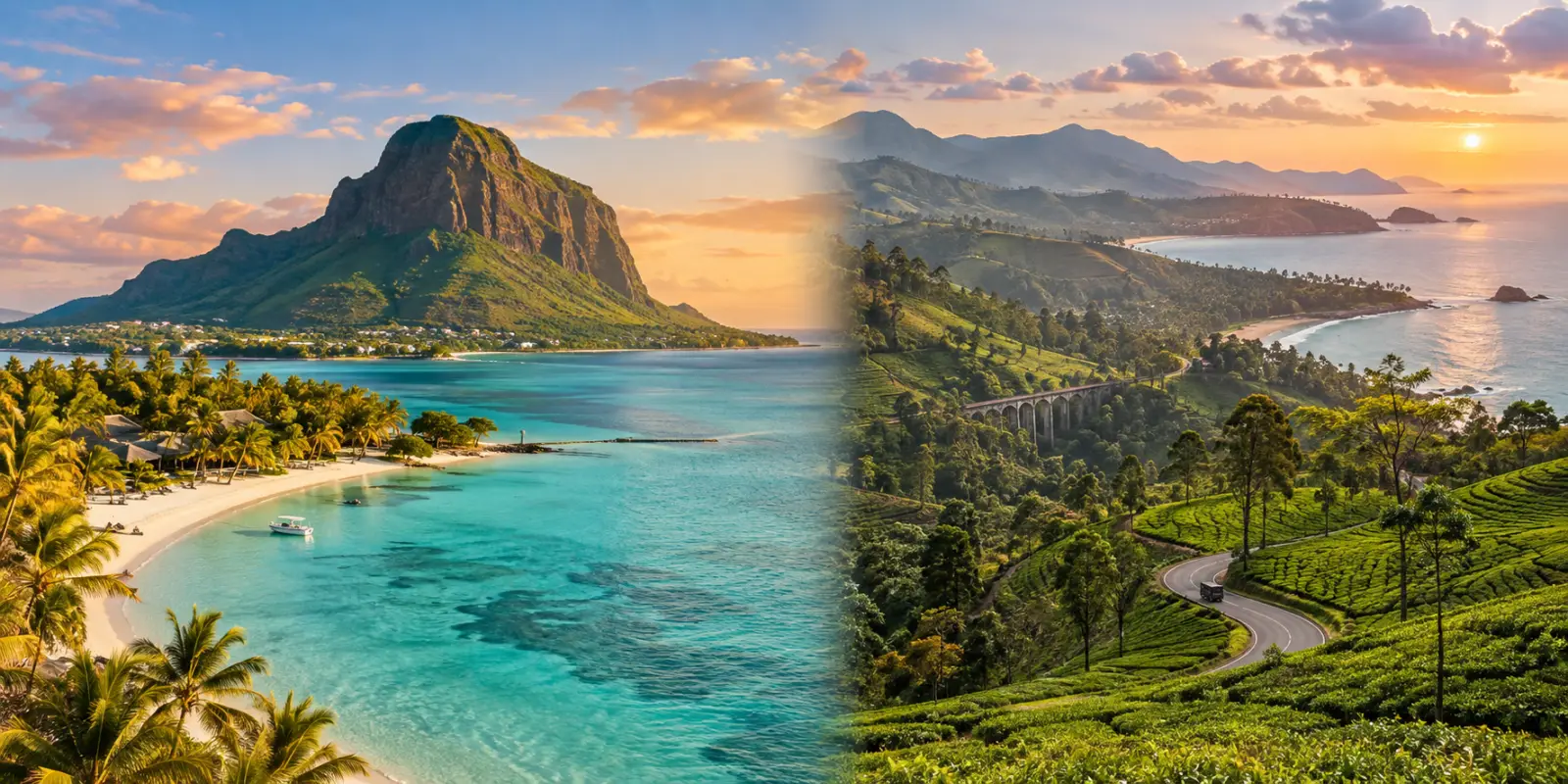
Mauritius and Sri Lanka both sit in the Indian Ocean, and at first glance they can look like variations of the same tropical escape: palm-lined beaches, warm water, green landscapes and year-round sunshine. In reality, they offer very different travel experiences.
Sri Lanka is larger, more varied and better suited to travellers who want to combine beaches with wildlife, mountains, historic cities, tea country and surfing. Mauritius is smaller, calmer and more polished as a resort destination, with sheltered lagoons, good roads, compact distances and an easier “one base, many day trips” format.
The cost difference is also important. Sri Lanka is generally easier to travel on a modest budget, especially if you use local transport, eat in local restaurants and stay in guesthouses or apartments. Mauritius does not have to mean luxury resorts, but accommodation near the coast, car rental, imported groceries and tourism services tend to make it more expensive overall.
| Category | Sri Lanka | Mauritius |
|---|---|---|
| Beaches | More varied, stronger surf, more open-ocean conditions | Calm lagoons, reefs and classic tropical swimming beaches |
| Nature | Mountains, rainforest, tea country, wildlife and safari parks | Volcanic scenery, lagoons, reefs, mountains and waterfalls |
| Culture | Major historic sites, temples and ancient cities | A distinctive mix of Indian, African, European and Chinese influences |
| Budget | Usually lower | Usually higher |
| Getting around | Trains, buses, tuk-tuks and taxis | Buses are available, but a car is much more convenient |
| Remote work | One-year Digital Nomad Visa | Renewable one-year Premium Visa |
| Variety | Large island with many distinct regions | Compact island that is easy to explore from one base |
| Best for | Active trips and frequent changes of scenery | Relaxed beach holidays and comfortable long stays |
Beaches: open ocean or sheltered lagoons?
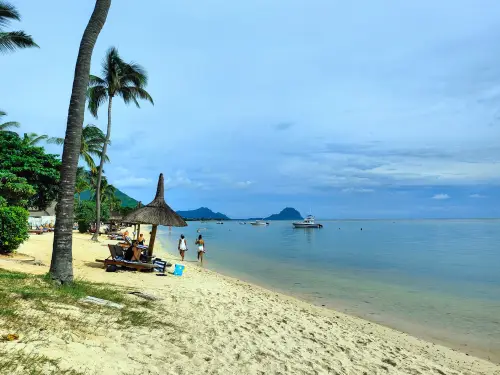
For travellers whose priority is easy swimming in clear, calm water, Mauritius has a strong advantage. Much of the coastline is protected by coral reefs, creating shallow turquoise lagoons between the shore and the open ocean. Le Morne, Belle Mare, Pereybere, Trou aux Biches, Flic-en-Flac and Blue Bay all offer different versions of the same classic tropical setting: pale sand, warm water and relatively sheltered swimming.
Sri Lanka feels much more like an ocean destination. Waves are often stronger, conditions can change quickly, and the quality of swimming depends heavily on both the beach and the season. That is also exactly why the island is so attractive to surfers. Hikkaduwa, Weligama, Midigama and Arugam Bay have all developed strong surf scenes, with everything from beginner-friendly breaks to more demanding reef and point breaks.
Sri Lanka also has an unusual advantage: its beach season shifts around the island. When the south and west coasts are affected by the southwest monsoon, better conditions can often be found on the east coast. During the northern winter, the south and southwest are usually the more popular beach regions.
So the distinction is fairly simple. Mauritius is usually the better fit for calm lagoon swimming and a classic resort-beach experience. Sri Lanka offers more variety, more surf and more reason to keep moving along the coast.
Nature and wildlife
Sri Lanka has the greater range of landscapes. Within one trip you can move from tropical beaches to rainforest, dry plains, highlands, waterfalls and tea plantations. Distances are not enormous, but the scenery can change dramatically within a few hours.
Wildlife is one of the country's biggest advantages. Yala and Wilpattu are known for leopard sightings, Udawalawe is famous for elephants, and other protected areas offer opportunities to see crocodiles, buffalo, monkeys and a wide variety of birds. Safari is not a minor side activity here; it can easily become one of the main reasons to visit.
Mauritius is smaller and has less large-animal wildlife, but its natural appeal is different rather than absent. Black River Gorges National Park, Le Morne Brabant, Chamarel and the island's waterfalls and volcanic terrain provide good hiking and road-trip scenery. Offshore, the lagoons and reefs make snorkelling, diving, kayaking and boat trips a major part of the experience.
For travellers who want a completely different landscape every few days, Sri Lanka offers more depth. Mauritius works better for combining the sea with short hikes, scenic drives and manageable day trips.
Climate and the best time to visit
Mauritius has a relatively straightforward seasonal pattern. The local meteorological service describes a warm, wetter summer from roughly November to April and a cooler, drier winter from June to September, with May and October acting as transition months. January and February are among the hottest months, while July and August are noticeably cooler, especially at night and in the central plateau.
The southwest Indian Ocean cyclone season runs broadly from November to May. That does not mean a cyclone will affect every trip, but it is a real seasonal factor worth considering when booking.
Sri Lanka is more complicated because different monsoon systems affect different parts of the island. The southwest monsoon mainly influences the west, south and central highlands from roughly May to September, while the northeast monsoon affects the opposite side later in the year. October and November can also bring unsettled weather to several regions.
As a result, choosing dates for Mauritius is mostly about choosing the season for the island as a whole. In Sri Lanka, it is often better to choose the region first and then decide when to go.
Which destination has more to see?
Sri Lanka has a clear advantage in traditional sightseeing. Sigiriya, the ancient cities of Anuradhapura and Polonnaruwa, the cave temples of Dambulla, Kandy and the Temple of the Tooth, Galle Fort, Nuwara Eliya and Ella can fill several weeks without repeating the same type of experience.
Even the journey between places can become part of the trip. The railway through the central highlands, particularly around Kandy, Nanu Oya and Ella, passes through tea country, mountain scenery and small stations and remains one of the country's best-known travel experiences.
Mauritius has fewer large historic attractions, but it is much easier to explore casually. Le Morne Brabant, Chamarel, the Seven Coloured Earths, Black River Gorges, Pamplemousses Botanical Garden, Port Louis, Île aux Cerfs and the southern coast can all be visited on relatively easy day trips.
Sri Lanka rewards a multi-stop itinerary. Mauritius is better suited to choosing one comfortable base and exploring the island without changing accommodation repeatedly.
Food
Sri Lankan food is bold, spicy and relatively inexpensive when you eat where locals do. Rice and curry, kottu roti, hoppers, dhal, seafood and tropical fruit can keep the food experience varied for a long stay. Tourist areas also have a growing number of cafés, bakeries, international restaurants and speciality coffee shops, so visitors are not limited to local cuisine.
Mauritian food reflects the island's mixed cultural history. Indian, Creole, French and Chinese traditions overlap in everyday dishes. Dholl puri, rougaille, curries, fried noodles, seafood and French-style pastries can all appear within the same neighbourhood.
The price gap between local and tourist-oriented dining is especially noticeable in Mauritius. Street food and small local restaurants can still be good value, while beachfront restaurants and hotel dining can be several times more expensive.
How much does it cost in 2026?
Older comparisons that present Sri Lanka as a destination where almost everything costs only a few dollars are no longer realistic. After several years of inflation and economic disruption, the country remains affordable by international tourism standards, but prices are higher than they were in the late 2010s or early 2020s.
As a rough guide, a budget-conscious independent traveller in Sri Lanka can often manage on around US$35–50 per day, while a more comfortable mid-range trip may be closer to US$60–90 per day. Private drivers, safari trips, higher-end hotels and paid attractions can push the total much higher.
Mauritius is usually more expensive. A budget trip using guesthouses, local food and buses may fall somewhere around US$50–80 per person per day, while a more typical comfortable holiday with a good apartment or hotel, restaurants, a rental car and excursions can easily reach US$120–200 per day or more. Luxury resorts sit in a different price category altogether.
The biggest difference is not necessarily local food. Accommodation, private transport, car rental and tourism services create most of the gap. Sri Lanka gives travellers more opportunities to reduce costs without giving up the trip entirely; Mauritius becomes expensive more quickly once you add a good coastal location and a car.
Accommodation and the style of travel
Sri Lanka has a huge range of guesthouses, villas, apartments and small hotels. In Weligama, Ahangama, Hikkaduwa, Ella and many other popular areas, travellers can choose anything from a basic family-run room to a private villa with a pool. That makes the country suitable for backpackers, long-stay visitors and travellers who prefer more comfort.
Mauritius has traditionally been associated with four- and five-star resorts, but independent accommodation is now easy to find. Apartments, small hotels and long-term rentals are common in places such as Grand Baie, Pereybere, Flic-en-Flac and Tamarin.
For stays of several weeks or months, however, the difference in overall cost becomes more obvious. Coastal rental prices in both countries vary enormously by area, season, length of stay and distance from the beach, so nationwide or capital-city averages are not especially useful when planning a long stay.
Getting around
Sri Lanka can be travelled without renting a vehicle. Buses cover most of the island, trains link many major cities and highland towns, and tuk-tuks and taxis handle shorter journeys. The system is inexpensive, but it is not always fast or comfortable.
For longer routes, many visitors hire a car with a driver. For couples, families or small groups, this can be much easier than navigating unfamiliar roads independently and often makes a multi-stop itinerary much more efficient.
Mauritius also has a bus network, and the Metro Express serves part of the more densely populated urban corridor. But for exploring beaches, mountain viewpoints and rural attractions, a rental car is far more convenient. Because the island is compact, having a car turns a large part of Mauritius into easy day-trip territory.
Both countries drive on the left.
Remote work and long stays
Mauritius had a clear head start in attracting remote workers, but Sri Lanka has now introduced a formal Digital Nomad Visa as well.
Sri Lanka's Digital Nomad Visa is designed for foreign nationals who work remotely for an overseas employer, freelance for foreign clients or run a business that is not registered in Sri Lanka. The visa is valid for one year. The main applicant must show a minimum monthly income remittance of US$2,000, and the official visa fee is US$500. Additional financial requirements apply in some cases for larger numbers of dependants.
Mauritius offers the Premium Visa, which allows eligible non-citizens to stay for one year and renew their stay. It is intended for long-stay visitors, retirees and professionals who work remotely or conduct business outside Mauritius. The Premium Visa itself is free of charge, although applicants still need to meet the programme's documentary and eligibility requirements.
For everyday convenience, Mauritius is generally more compact and predictable: distances are shorter, roads are relatively good, and long-stay life can be organised around one coastal base. Sri Lanka usually offers lower living costs and a much wider choice of places to live, but internet quality, road conditions and local infrastructure vary more sharply from one area to another.
Entry rules and visas in 2026
Visa rules depend on nationality, so international travellers should always check the official immigration website for their own passport before booking.
As of 18 September 2026, Sri Lanka offers a free 30-day tourist ETA to citizens of 40 countries. The list includes Australia, Canada, China, France, Germany, India, Italy, Japan, New Zealand, South Korea, Spain, the United Kingdom, the United States and several other European, Asian and Middle Eastern countries. Travellers covered by the scheme still need to obtain an ETA before arrival. Other nationalities remain subject to the general ETA rules. Tourist stays can be extended, with fees depending on nationality and length of stay.
Mauritius has a different system: entry conditions vary substantially by passport. Many nationalities can visit without obtaining a visa in advance, while others require a visa or other authorisation before travel. Rather than relying on a generic nationality list in a travel article, it is safer to check the current visa table published by the Mauritius Passport and Immigration Office.
All travellers to Mauritius should also complete the official Mauritius All-in-One Travel Digital Form before departure. The form is free, and proof of completion may be required when boarding.
Which is better for a stay of several months?
Sri Lanka is usually the more flexible choice for travellers who want to keep costs down and change location during a long stay. You can spend a month on the south coast, move to the hill country, change beach towns or head east when the season shifts. The large supply of inexpensive accommodation, cafés and local transport makes it easier to adjust spending as you go.
Mauritius suits a different type of long stay. It works well if you want to rent an apartment or house near the sea, keep one base, rent a car and live within a relatively compact and organised environment. The trade-off is a higher monthly budget.
Now that both countries offer formal one-year options for eligible remote workers, the decision is less about which country has a long-stay visa at all and more about cost, lifestyle, work requirements and how much variety you want around you.
Mauritius or Sri Lanka: which one should you choose?
Sri Lanka offers more contrast within a single trip. You can start on a beach, move into cool tea-growing highlands, visit an ancient city and then go on safari. It is particularly well suited to travellers who become restless in one resort area, who want to travel for several weeks, or who need to keep their budget under control.
Mauritius is better at being compact, comfortable and easy to manage. Its calm lagoons, attractive coastal towns and short driving distances make it especially suitable for travellers who want a relaxed beach holiday, a comfortable apartment or villa and occasional road trips rather than constant movement.
For a one-week or ten-day holiday centred on swimming and relaxation, Mauritius may feel more coherent. For a two- or three-week trip built around variety, Sri Lanka gives you far more ways to change the character of the journey. For a stay of several months, the more important questions are budget, where you want to live, whether you are willing to rent a car, what standard of internet and infrastructure you need, and which immigration route fits your passport and work situation.
The two islands are not really substitutes for one another. Mauritius is a compact tropical destination designed around lagoons, comfort and easy day trips. Sri Lanka is a larger travel experience in which beaches are only one part of the story.
Information checked: 18 September 2026.
Sources for changing information: Department of Immigration and Emigration of Sri Lanka, Sri Lanka Tourism, Passport and Immigration Office of Mauritius, Government of Mauritius, Mauritius Meteorological Services and current cost-of-living data sources. Visa and entry requirements should always be checked again before travel.
Note: An earlier version of this comparison was also published on our Sri Lanka website, Ceylon Anilau.
Author: Editorial team
Read also
All articles
Whales in Mauritius: same-sex love, battles with squids and 20 minutes of sleep
A huge carcass emerged from the water a few meters away from us. As if in slow motion, the sperm whale flew up above the…
The Top 10 Little Known But Impressive Facts About Mauritius
Mauritius is a small island nation located in the Indian Ocean, and while it may not be as well-known as some other tourist destinations, it…
Weather in Mauritius by Month
When to visit Mauritius for beaches, hiking, whales or kitesurfing: a practical month-by-month guide to climate, rain, wind and cyclones.
Mauritius with Children
A practical family guide to Mauritius: choosing a district and beach, booking suitable accommodation, getting around, food, healthcare and a relaxed 7–10-day itinerary.
Short videos with beautiful views of Mauritius
Where to Stay in Mauritius: Areas for Tourists and Expats
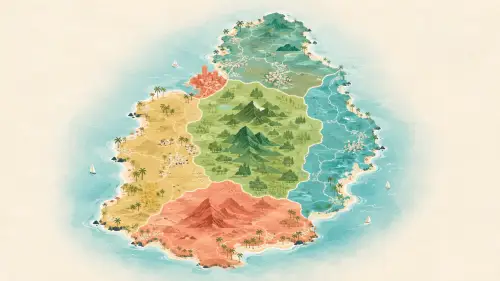
A practical guide to choosing where to stay in Mauritius by climate, beaches, transport, services and lifestyle: North, West, East, South, Centre and Port Louis.
Comments
Share your thoughts or ask a question about this article.